

Showing posts with label QE. Show all posts
Showing posts with label QE. Show all posts
12:53 PM
Recovery disappointment is still here. Slow for sure. Vern Gowdie of Daily Reckoning writes that two problems exist:
Tyler Durden of zerohedge.com writes on the Fed's QE and how it must be sustained. But it has an expiration date. Just what that date is is not known, but I have a feeling that it could be within 14 months. Can stock valuations survive?
The Truth About QE. Read the story: CLICK HERE
- As income declined, credit became the chief vehicle for maintaining living standards.
- Employment is less attractive.
Tyler Durden of zerohedge.com writes on the Fed's QE and how it must be sustained. But it has an expiration date. Just what that date is is not known, but I have a feeling that it could be within 14 months. Can stock valuations survive?
The Truth About QE. Read the story: CLICK HERE
9:17 AM
 |
| from sreettalklive.com |
First, there are three components we all need to take into consideration that correlate with interest rates:
- Inflation
- Economic Growth
- Wage Growth
The stock market has been going higher. This isn't a good barometer, as Mr. Roberts points out, for what really is going on in the economy when it comes to consumers. I agree. He also points out that stocks are cheap based on low interest rates. The Fed has been buying bonds for the past 4 years to keep interest rates low. We have to wonder if the Fed will continue this policy. I say yes they will as higher interest rates at this time will slow consumption. Consumption is already slow. Why would anyone allow for higher interest rates now? The Fed may be in a corner, but really the choice is clear: more bond intervention.
Rising rates, as Mr. Roberts points out, are a negative for stock market returns. Some may say the bond market is in a bubble, but the chart displays that interest rates in relation to the three components are fairly valued.
Read in the entire story by Tyler Durden on zerohedge.com
11:45 PM
Ben Bernanke steps down as chair of the Federal Reserve. He had a surprise and pulled a token taper out of his vest of just $10 billion. The Fed's Wednesday taper decision will cut monthly purchases from $85
billion to $75 billion in January, with further curbs if the economy
continues to improve. The taper decision took all year. Anyone win a pool on this?
Oh, by the way, the Fed balance sheet swelled to $4 trillion. At $4.01 trillion for the week ended December 18th. It was less than $1 trillion before the financial crisis in 2008. The taper will only slow that balance sheet boom. Exiting the unprecedented quantitative easing could be even harder, even as policymakers have acknowledged that that the balance sheet raises risks. The full exit could take years.
Active selling of assets would drive mortgage and Treasury rates higher. That could also depress bond prices.
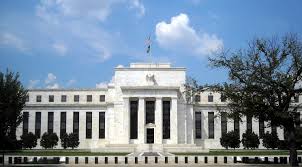
The central bank could hold its assets and keep interest low. This means the drag on the economy continues. So the end is near for Bernanke as chairman. The end seems like the place to start.
Oh, by the way, the Fed balance sheet swelled to $4 trillion. At $4.01 trillion for the week ended December 18th. It was less than $1 trillion before the financial crisis in 2008. The taper will only slow that balance sheet boom. Exiting the unprecedented quantitative easing could be even harder, even as policymakers have acknowledged that that the balance sheet raises risks. The full exit could take years.
Active selling of assets would drive mortgage and Treasury rates higher. That could also depress bond prices.
The central bank could hold its assets and keep interest low. This means the drag on the economy continues. So the end is near for Bernanke as chairman. The end seems like the place to start.
6:25 PM
The American economy is proving a bit tricky at the moment. Housing markets continue to strengthen, and the labor market is maintaining its plodding but stable rate of improvement. One wonders to what extent equity prices reflect global, rather than domestic, factors. Markets got a little nervous about recovery in the spring. Markets anticipate faster Fed tightening, but that's mostly because the recovery has sturdier legs. America seems to be getting much more real growth relative to inflation than it did earlier in the recovery.
Alternatively, one could say that markets got nervous about recovery in the spring, became more confident from early May, but have since become very worried about too-rapid Fed tightening.
Talk of "financial stability concerns" and QE tapering has come even as the global economy has looked shakier. There is no cause, whatsoever, for the Fed to begin tightening. On the contrary, the Fed has every reason to keep the pedal to the metal.
Better American fundamentals should make monetary policy more effective and give the Fed more room to ease, but the Fed instead seems to want to use them as an excuse to tighten. That's not good.
Alternatively, one could say that markets got nervous about recovery in the spring, became more confident from early May, but have since become very worried about too-rapid Fed tightening.
Talk of "financial stability concerns" and QE tapering has come even as the global economy has looked shakier. There is no cause, whatsoever, for the Fed to begin tightening. On the contrary, the Fed has every reason to keep the pedal to the metal.
Better American fundamentals should make monetary policy more effective and give the Fed more room to ease, but the Fed instead seems to want to use them as an excuse to tighten. That's not good.