

Showing posts with label bonds. Show all posts
Showing posts with label bonds. Show all posts
11:45 PM
Ben Bernanke steps down as chair of the Federal Reserve. He had a surprise and pulled a token taper out of his vest of just $10 billion. The Fed's Wednesday taper decision will cut monthly purchases from $85
billion to $75 billion in January, with further curbs if the economy
continues to improve. The taper decision took all year. Anyone win a pool on this?
Oh, by the way, the Fed balance sheet swelled to $4 trillion. At $4.01 trillion for the week ended December 18th. It was less than $1 trillion before the financial crisis in 2008. The taper will only slow that balance sheet boom. Exiting the unprecedented quantitative easing could be even harder, even as policymakers have acknowledged that that the balance sheet raises risks. The full exit could take years.
Active selling of assets would drive mortgage and Treasury rates higher. That could also depress bond prices.
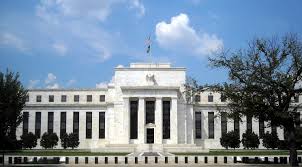
The central bank could hold its assets and keep interest low. This means the drag on the economy continues. So the end is near for Bernanke as chairman. The end seems like the place to start.
Oh, by the way, the Fed balance sheet swelled to $4 trillion. At $4.01 trillion for the week ended December 18th. It was less than $1 trillion before the financial crisis in 2008. The taper will only slow that balance sheet boom. Exiting the unprecedented quantitative easing could be even harder, even as policymakers have acknowledged that that the balance sheet raises risks. The full exit could take years.
Active selling of assets would drive mortgage and Treasury rates higher. That could also depress bond prices.
The central bank could hold its assets and keep interest low. This means the drag on the economy continues. So the end is near for Bernanke as chairman. The end seems like the place to start.
5:57 AM
Credit spreads are wide. Widest since the first of the year.
Meanwhile, In Investment Grade Bond Land...
Meanwhile, In Investment Grade Bond Land...
Link to the zerohedge.com story:
http://www.zerohedge.com/news/2013-06-04/meanwhile-investment-grade-bond-land
+CNNMoney
---
Sent from Zite, available for free in the App Store.
Sent from my iPhone
10:03 PM
The stock market has had a 6.5% rally. However a handful of heavy weights have been quietly dumping their stock. Warren Buffet is one of those. He has been disappointed in earnings from companies like Johnson and Johnson, Proctor and Gamble, and Kraft Foods.
Buffet has been reducing his holdings in consumer stocks. With the American economy at 70% consumer spending, Buffet seems to have a lack of consumer confidence of his own. He's not alone.
John Paulson is clearing out his U.S. stock portfolio too. During Q2 of 2012 he dumped 14 million shares of JPMorgan Chase. George Soros sold all of his bank stocks.
Why a dump all of a sudden? Perhaps the professionals are aware of a big correction coming. A correction one economist has pegged at 90%. That economist is Robert Wiedemer, author of the best-selling book Aftershock.
Mr. Wiedemer correctly predicted the housing debacle of 2006.
One reason why he thinks a correction is coming is The Federal Reserve's money printing practice.
My feeling is that inflation follows. If inflation hits 10%, 10-year Treasury bonds lose half their value. 20% inflation means no value at all.
Buffet has been reducing his holdings in consumer stocks. With the American economy at 70% consumer spending, Buffet seems to have a lack of consumer confidence of his own. He's not alone.
John Paulson is clearing out his U.S. stock portfolio too. During Q2 of 2012 he dumped 14 million shares of JPMorgan Chase. George Soros sold all of his bank stocks.
Why a dump all of a sudden? Perhaps the professionals are aware of a big correction coming. A correction one economist has pegged at 90%. That economist is Robert Wiedemer, author of the best-selling book Aftershock.
Mr. Wiedemer correctly predicted the housing debacle of 2006.
One reason why he thinks a correction is coming is The Federal Reserve's money printing practice.
My feeling is that inflation follows. If inflation hits 10%, 10-year Treasury bonds lose half their value. 20% inflation means no value at all.
9:16 AM
Nervousness. That's the best way to describe the mood of the markets. That mood has not entirely filtered across the national spectrum regarding the economy. Close though. Retail spending is low. Which in a way is good. That tells me that households are indeed watching their spending. But, with an economy geared towards spending, that doesn't sit well with the big banks and hedge funds. Wall Street, as a whole, has been watching for the bright and shining light to bring the American economy out of darkness. Alas, that light has not been shown.
Housing is still down. There has been a rise in home construction to be sure. But realize just how much new building needs to happen to create more jobs. We need about 400,000 to 600,000 jobs a month, for I don't know how many months, to get unemployment down to 10 year ago levels.
The DJIA is hovering at the 13,000 level. To be sure there are those who say a new bull market is within reach. But realize that more and more money is being taken out of the stock market practically daily. Is there the push to bring in a new bull?
Everything going wrong with the U.S. economy has to do with our massive debt levels. The current national debt grossly exceeds 15 trillion dollars. But don't miss seeing the bigger picture. Along with that the U.S. government is also sitting on 84 trillion dollars in unfunded liabilities in Social Security, Medicaid, and other entitlement programs. Nearly 100 trillion dollars total!
To put it in perspective, if you spent 1 dollar every second, every single day, every single year..... it would take 31,000 years to spend just 1 trillion dollars. Now multiply that by 100.
Divided by every citizen of the United States, this equates to to more than 318,000 owed by every citizen in the U.S. During the Obama administration more debt has been racked up than the administrations of George Washington through George H.W. Bush (Bush 41) combined. This is the component that could unhinge our global economy. One analyst on CNBC talked about Europe, but asked what about the United States. Seems we are not looking in our own backyard.
Fox News reported in August 2011, American debt had already surpassed its entire 2010 GDP of 14.53 trillion dollars.
The U.S. government borrows four out of every ten dollars it spends. Our Social Security taxes (what you and I pay through income taxes) have 40 percent going to pay the INTEREST on the debt.
Without borrowing money to fill its quarter of the GDP and cover the national debt, 10 percent of our economy could vanish. It's looking more and more likely to prevent this is to raise the debt ceiling. That obviously will bring a fight in Congress.
The Treasury Borrowing Advisory Committee is in fear of a massive sell-off of Treasury bonds by foreign investors. This could place another 75 billion dollars on taxpayers. This also would increase mortgage lending rates. Treasury Secretary Geithner reported that the debt ceiling debate will come AFTER November's election day. His timing is off!
The mudslinging has already begun. Speaker John Boehner has said no to a rise in the debt ceiling. We very well can't operate without a rise. Not raising the debt ceiling could put the entire market in peril. Prices for core goods will rise, another collapse of the housing market could happen, and a destruction of wealth is sure to overtake us.
As much as I wish to keep more debt from happening, a rise in the debt ceiling has to happen. After that, than what?
QE3, that's what.
I wrote earlier that Geithner's timing was off. When will it be? I say at the end of September. There most likely will be monumental events that will happen to the U.S. economy to put the debt ceiling debate into gear. Look at the Treasury auction results. If you see those auctions starting to falter, that's the trigger. Bernanke will make the case for more easing by the Fed. These events will just "kick the can" down the road some more and we'll deal with it in the new year, no matter who the president is.
Housing is still down. There has been a rise in home construction to be sure. But realize just how much new building needs to happen to create more jobs. We need about 400,000 to 600,000 jobs a month, for I don't know how many months, to get unemployment down to 10 year ago levels.
The DJIA is hovering at the 13,000 level. To be sure there are those who say a new bull market is within reach. But realize that more and more money is being taken out of the stock market practically daily. Is there the push to bring in a new bull?
Everything going wrong with the U.S. economy has to do with our massive debt levels. The current national debt grossly exceeds 15 trillion dollars. But don't miss seeing the bigger picture. Along with that the U.S. government is also sitting on 84 trillion dollars in unfunded liabilities in Social Security, Medicaid, and other entitlement programs. Nearly 100 trillion dollars total!
To put it in perspective, if you spent 1 dollar every second, every single day, every single year..... it would take 31,000 years to spend just 1 trillion dollars. Now multiply that by 100.
Divided by every citizen of the United States, this equates to to more than 318,000 owed by every citizen in the U.S. During the Obama administration more debt has been racked up than the administrations of George Washington through George H.W. Bush (Bush 41) combined. This is the component that could unhinge our global economy. One analyst on CNBC talked about Europe, but asked what about the United States. Seems we are not looking in our own backyard.
Fox News reported in August 2011, American debt had already surpassed its entire 2010 GDP of 14.53 trillion dollars.
The U.S. government borrows four out of every ten dollars it spends. Our Social Security taxes (what you and I pay through income taxes) have 40 percent going to pay the INTEREST on the debt.
Without borrowing money to fill its quarter of the GDP and cover the national debt, 10 percent of our economy could vanish. It's looking more and more likely to prevent this is to raise the debt ceiling. That obviously will bring a fight in Congress.
The Treasury Borrowing Advisory Committee is in fear of a massive sell-off of Treasury bonds by foreign investors. This could place another 75 billion dollars on taxpayers. This also would increase mortgage lending rates. Treasury Secretary Geithner reported that the debt ceiling debate will come AFTER November's election day. His timing is off!
The mudslinging has already begun. Speaker John Boehner has said no to a rise in the debt ceiling. We very well can't operate without a rise. Not raising the debt ceiling could put the entire market in peril. Prices for core goods will rise, another collapse of the housing market could happen, and a destruction of wealth is sure to overtake us.
As much as I wish to keep more debt from happening, a rise in the debt ceiling has to happen. After that, than what?
QE3, that's what.
I wrote earlier that Geithner's timing was off. When will it be? I say at the end of September. There most likely will be monumental events that will happen to the U.S. economy to put the debt ceiling debate into gear. Look at the Treasury auction results. If you see those auctions starting to falter, that's the trigger. Bernanke will make the case for more easing by the Fed. These events will just "kick the can" down the road some more and we'll deal with it in the new year, no matter who the president is.
8:52 AM
Right now could be the calm before the storm as far as the debt goes in the United States. The U.S. is in the spot of a good thing however with U.S. assets in demand over the European situation. The U.S. can print its own money.
Debt at the federal level is just about at 100 percent of GDP. The crisis level is 110 to 120 percent of GDP, but the U.S. is running debtsat 8 percent of GDP per year. This puts a crisis mode situation in the mix in about 2 to 3 years.
In that time the bond market could go south, pushing interest rates higher. The dollar value will go down too. Anti-dollar instruments may be a good idea as far as investments go.
Get you free copy of the Great Super Cycle - READ MORE.
Debt at the federal level is just about at 100 percent of GDP. The crisis level is 110 to 120 percent of GDP, but the U.S. is running debtsat 8 percent of GDP per year. This puts a crisis mode situation in the mix in about 2 to 3 years.
In that time the bond market could go south, pushing interest rates higher. The dollar value will go down too. Anti-dollar instruments may be a good idea as far as investments go.
Get you free copy of the Great Super Cycle - READ MORE.