

Showing posts with label fed. Show all posts
Showing posts with label fed. Show all posts
8:26 PM
No surprises from the Federal Reserve Open Market Committee.The committee said it would take $10 billion off its monthly asset purchases. Interest rates to remain at 0 - .25%.
In the June minutes, the committee said it would conclude QE in its October meeting.
In the statement today, the FOMC said, "a range of labor market indicators suggests that there remains significant underutilization of labor resources." Translated: no significant job growth. Expect inflation to rise just a bit too.
For the full statement from the Fed, click here for the businessinsider.com story which was the source for this entry.
In the June minutes, the committee said it would conclude QE in its October meeting.
In the statement today, the FOMC said, "a range of labor market indicators suggests that there remains significant underutilization of labor resources." Translated: no significant job growth. Expect inflation to rise just a bit too.
For the full statement from the Fed, click here for the businessinsider.com story which was the source for this entry.
7:19 AM
CNBC welcomed Jim Grant of Grant's Interest Rate Observer. Jim is bullish on the asset class global market. He went on to say that the Fed has crushed credit spreads. This has resulted in many investors shorting treasuries to hedge against rising rates.
Has the Fed fueled inflation?
ADP released the June numbers for payrolls. Manufacturing up 12,000, construction up 36,000. May payrolls left unrevised at 179,000 to the upside.
Has the Fed fueled inflation?
ADP released the June numbers for payrolls. Manufacturing up 12,000, construction up 36,000. May payrolls left unrevised at 179,000 to the upside.
3:38 PM
I came across an article from Market Watch tweeted by Ben Eisen on Treasury inflation-protected securities (TIPS).
TIPS protect against inflation. The article goes on to say TIPS have stabilized this year amid rising inflation. If CPI keeps climbing, TIPS look more attractive and could see growing demand.
TIPS are leading the way in a market that's decided to ignore Yellen's inflation remarks http://t.co/zA7WFrAV1w pic.twitter.com/goutcLcyxU
— Ben Eisen (@BenEisen) June 20, 2014
The interesting item that struck me was Fed Chairman Yellen shrugging off a recent rise in inflation. Apparently no big deal. Let's hope.
TIPS protect against inflation. The article goes on to say TIPS have stabilized this year amid rising inflation. If CPI keeps climbing, TIPS look more attractive and could see growing demand.
12:53 PM
Recovery disappointment is still here. Slow for sure. Vern Gowdie of Daily Reckoning writes that two problems exist:
Tyler Durden of zerohedge.com writes on the Fed's QE and how it must be sustained. But it has an expiration date. Just what that date is is not known, but I have a feeling that it could be within 14 months. Can stock valuations survive?
The Truth About QE. Read the story: CLICK HERE
- As income declined, credit became the chief vehicle for maintaining living standards.
- Employment is less attractive.
Tyler Durden of zerohedge.com writes on the Fed's QE and how it must be sustained. But it has an expiration date. Just what that date is is not known, but I have a feeling that it could be within 14 months. Can stock valuations survive?
The Truth About QE. Read the story: CLICK HERE
9:17 AM
 |
| from sreettalklive.com |
First, there are three components we all need to take into consideration that correlate with interest rates:
- Inflation
- Economic Growth
- Wage Growth
The stock market has been going higher. This isn't a good barometer, as Mr. Roberts points out, for what really is going on in the economy when it comes to consumers. I agree. He also points out that stocks are cheap based on low interest rates. The Fed has been buying bonds for the past 4 years to keep interest rates low. We have to wonder if the Fed will continue this policy. I say yes they will as higher interest rates at this time will slow consumption. Consumption is already slow. Why would anyone allow for higher interest rates now? The Fed may be in a corner, but really the choice is clear: more bond intervention.
Rising rates, as Mr. Roberts points out, are a negative for stock market returns. Some may say the bond market is in a bubble, but the chart displays that interest rates in relation to the three components are fairly valued.
Read in the entire story by Tyler Durden on zerohedge.com
1:09 PM
A good article I came across has some good ammo on why the economic recovery isn't really happening. The recovery (if that is what you call it) is flat.
The Fed's efforts has injected money into the stock markets. Several analysts have stated since last summer that that's about all the Fed's QE policy has accomplished.
Here are a couple of items from list list of 37:
Why an Economy Grows and Why it Crashes
The Fed's efforts has injected money into the stock markets. Several analysts have stated since last summer that that's about all the Fed's QE policy has accomplished.
Here are a couple of items from list list of 37:
- The employment-population ratio has now been under 59 for 51 months in a row.
- Only about 47% of the adults in the U.S. have a full-time job.
Why an Economy Grows and Why it Crashes
11:45 PM
Ben Bernanke steps down as chair of the Federal Reserve. He had a surprise and pulled a token taper out of his vest of just $10 billion. The Fed's Wednesday taper decision will cut monthly purchases from $85
billion to $75 billion in January, with further curbs if the economy
continues to improve. The taper decision took all year. Anyone win a pool on this?
Oh, by the way, the Fed balance sheet swelled to $4 trillion. At $4.01 trillion for the week ended December 18th. It was less than $1 trillion before the financial crisis in 2008. The taper will only slow that balance sheet boom. Exiting the unprecedented quantitative easing could be even harder, even as policymakers have acknowledged that that the balance sheet raises risks. The full exit could take years.
Active selling of assets would drive mortgage and Treasury rates higher. That could also depress bond prices.
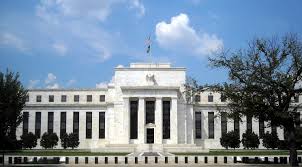
The central bank could hold its assets and keep interest low. This means the drag on the economy continues. So the end is near for Bernanke as chairman. The end seems like the place to start.
Oh, by the way, the Fed balance sheet swelled to $4 trillion. At $4.01 trillion for the week ended December 18th. It was less than $1 trillion before the financial crisis in 2008. The taper will only slow that balance sheet boom. Exiting the unprecedented quantitative easing could be even harder, even as policymakers have acknowledged that that the balance sheet raises risks. The full exit could take years.
Active selling of assets would drive mortgage and Treasury rates higher. That could also depress bond prices.
The central bank could hold its assets and keep interest low. This means the drag on the economy continues. So the end is near for Bernanke as chairman. The end seems like the place to start.
1:01 PM

President Obama has desired more economic regulation
That seems simple enough doesn't it? What's the problem? Regulation has grown too much, stopping job growth. The wrong item is growing. We are placing too much protection from creative disruption.
The Federal Reserve hasn't recognized this and are still searching for an explanation.
6:25 PM
The American economy is proving a bit tricky at the moment. Housing markets continue to strengthen, and the labor market is maintaining its plodding but stable rate of improvement. One wonders to what extent equity prices reflect global, rather than domestic, factors. Markets got a little nervous about recovery in the spring. Markets anticipate faster Fed tightening, but that's mostly because the recovery has sturdier legs. America seems to be getting much more real growth relative to inflation than it did earlier in the recovery.
Alternatively, one could say that markets got nervous about recovery in the spring, became more confident from early May, but have since become very worried about too-rapid Fed tightening.
Talk of "financial stability concerns" and QE tapering has come even as the global economy has looked shakier. There is no cause, whatsoever, for the Fed to begin tightening. On the contrary, the Fed has every reason to keep the pedal to the metal.
Better American fundamentals should make monetary policy more effective and give the Fed more room to ease, but the Fed instead seems to want to use them as an excuse to tighten. That's not good.
Alternatively, one could say that markets got nervous about recovery in the spring, became more confident from early May, but have since become very worried about too-rapid Fed tightening.
Talk of "financial stability concerns" and QE tapering has come even as the global economy has looked shakier. There is no cause, whatsoever, for the Fed to begin tightening. On the contrary, the Fed has every reason to keep the pedal to the metal.
Better American fundamentals should make monetary policy more effective and give the Fed more room to ease, but the Fed instead seems to want to use them as an excuse to tighten. That's not good.
10:58 AM
The notion of "bank" is expanding. There is an ever-growing macro-economic risk in having larger entities like we have today. An intertwining of the industrial economy and the supply chain with the financial system creates systemic risk.
Does this relatively new corporate structure contribute to the likelihood of industrial supply shocks?
Morgan Stanley, according to its investment documents, is engaged “in the production, storage, transportation, marketing and trading of several commodities, including metals (base a nd precious), agricultural products, crude oil, oil products, natural gas, electric power, emission credits, coal, freight, liquefied natural gas and related products and indices." Goldman Sachs, according to its own recent investment reports, is engaged in “the production, storage, transportation, marketing and trading of numerous commodities, including crude oil, oil products, natural gas, electric power, agricultural products, metals (base and precious), minerals (including uranium), emission credits, coal, freight, liquefied natural gas and related products and indices.”
The root story.
How is the Federal Reserve responding to the shift?
Does this relatively new corporate structure contribute to the likelihood of industrial supply shocks?
Morgan Stanley, according to its investment documents, is engaged “in the production, storage, transportation, marketing and trading of several commodities, including metals (base a nd precious), agricultural products, crude oil, oil products, natural gas, electric power, emission credits, coal, freight, liquefied natural gas and related products and indices." Goldman Sachs, according to its own recent investment reports, is engaged in “the production, storage, transportation, marketing and trading of numerous commodities, including crude oil, oil products, natural gas, electric power, agricultural products, metals (base and precious), minerals (including uranium), emission credits, coal, freight, liquefied natural gas and related products and indices.”
The root story.
How is the Federal Reserve responding to the shift?
2:41 PM
Fed Chairman Ben Bernanke testified recently on Capital Hill. Items about the future were plenty, but lack of direction was there too.
He touched on six items:
1. The Fed is unlikely to begin “tapering” its policy of quantitative easing before December.
2. The big decisions will fall to Bernanke’s successor.
3. We still don’t know whether the U.S. economy is approaching “escape velocity”—the point at which it no longer needs extensive support from the Fed.
4. The federal-funds rate, and the short-term interest rates that are tied to it, won’t be going up anytime soon.
5. For now, the Fed remains Wall Street’s friend.
6. The Fed’s central policy dilemma remains unresolved.
The challenge: how to withdraw monetary stimulus without spooking the markets and undermining the recovery.
He touched on six items:
1. The Fed is unlikely to begin “tapering” its policy of quantitative easing before December.
2. The big decisions will fall to Bernanke’s successor.
3. We still don’t know whether the U.S. economy is approaching “escape velocity”—the point at which it no longer needs extensive support from the Fed.
4. The federal-funds rate, and the short-term interest rates that are tied to it, won’t be going up anytime soon.
5. For now, the Fed remains Wall Street’s friend.
6. The Fed’s central policy dilemma remains unresolved.
The challenge: how to withdraw monetary stimulus without spooking the markets and undermining the recovery.
9:57 PM
We are living on Fed dollars. The Federal Reserve has decided to use the price of financial securities as a signal that its efforts are yielding results. The trends of successive Fed programs yields smallet and shorter-lived boosts.


Source article and chart from zerohedge.com
10:29 PM
U.S. markets are higher and less volatile. The economy still feels weak.
Barclays analysts released their new Global Outlook - stating to stay in stocks. Ben Bernanke, Federal Reserve chairman, has said that stock market highs are not a new bubble. He said stocks should be high because companies are booking strong profits.
The economic confidence has not been boosted with the stock market numbers. Does the global expansion have staying power? The Fed bond buying hasn't hurt, keeping interest rates low.
Are we sleepwalking? Maybe.
One item to look at is volatility and it has been low as of late, indicating steady stock price increases and a recovering economy. The Bernanke approach will continue. He said low interest rates in advanced nations benefit the world economy.
Volatility will not remain low. Will value producing profits remain high? That depends. More chapters of the long-term debt purchases by the Fed have to be written.
Source posts: How To Square the Market Bernanke Says Easing by Advanced Nations Helps
Barclays analysts released their new Global Outlook - stating to stay in stocks. Ben Bernanke, Federal Reserve chairman, has said that stock market highs are not a new bubble. He said stocks should be high because companies are booking strong profits.
The economic confidence has not been boosted with the stock market numbers. Does the global expansion have staying power? The Fed bond buying hasn't hurt, keeping interest rates low.
Are we sleepwalking? Maybe.
One item to look at is volatility and it has been low as of late, indicating steady stock price increases and a recovering economy. The Bernanke approach will continue. He said low interest rates in advanced nations benefit the world economy.
Volatility will not remain low. Will value producing profits remain high? That depends. More chapters of the long-term debt purchases by the Fed have to be written.
Source posts: How To Square the Market Bernanke Says Easing by Advanced Nations Helps
12:13 PM
Fed chairman Ben Bernanke brushed aside the risk of asset bubbles. Bernanke spoke at a Treasury Borrowing Advisory Committee meeting held in early February. Other concerns raised were rising farmland prices and the growth of mortgage real estate investment trusts.
The February 20th release of minutes of the central bank's last policy making meeting showed concern about potential costs and risks arising from further asset purchases. The committee advise the Treasury Department on how to raise money to finance the government.
The February 20th release of minutes of the central bank's last policy making meeting showed concern about potential costs and risks arising from further asset purchases. The committee advise the Treasury Department on how to raise money to finance the government.
4:48 PM
Maybe Wall Street should pay attention to Main Street. The consumer confidence index this week dropped to its widest margin month-to-month since August 2011. Eric Jones of TD Securities said on Friday, February 1, "That was the best negative print on GDP I have ever seen", attributing weakness in the -0.1% 4th quarter to slower defense spending. Main Street sees a double-dip recession as a real possibility. The Fed in confident that the asset purchase program will be successful.
The Conference Board's index decreased to 58.6 as released this week and actually saw December's number revised down to 66.7, the worst reading by American consumers since November 2011.
Americans who make less than $500,000 per year will see an increase of 1% to 1.4% in their annual effective tax rate as a result of the payroll tax increase. Americans are expected to pay $205 billion more in 2013 than in 2012.
Consumer spending increased 2.2% in the fourth quarter. Manufacturing got a boost as business invested in capital goods like computers and trucks. Total business investment surged 12.5%.
The Conference Board's index decreased to 58.6 as released this week and actually saw December's number revised down to 66.7, the worst reading by American consumers since November 2011.
Americans who make less than $500,000 per year will see an increase of 1% to 1.4% in their annual effective tax rate as a result of the payroll tax increase. Americans are expected to pay $205 billion more in 2013 than in 2012.
Consumer spending increased 2.2% in the fourth quarter. Manufacturing got a boost as business invested in capital goods like computers and trucks. Total business investment surged 12.5%.
8:49 PM

High frequency. That's how I describe the market economy these days. We have to be on a whole new high frequency to keep up with what's going on. Or at least I'd like to think so. We have had quite a bit of information to digest. With Quantative Easing in place with the Fed buying mortgage backed securities at a furious pace, which will keep interest rates low; perhaps as far out as 2016, giving investors more incentive for dividend paying stocks. ETF's are also a big product now (no more stock picking).
What will Treasuries be like in one year? Flatlined? Well, maybe. The demand for them surely can't be increasing. Someone must know something I don't. Well.... yeah.
The S&P 500 has had a good three-year run. Throughout it all.... fiscal cliff, etc., the S&P has been a leader as far as market barometers go.
The economy still has a demand problem.

Labor share of income hit an all-time low in 2012. Corporate investors reaped nice gains as the labor market stays weak. The Retail ETF (XRT) beat the S&P 500, while the Homebuilders ETF (XHB) was the cream of the crop.
And all of a sudden housing is back. Thank you Ben! The Fed move is tying more to housing than what I had expected. With that...........

expect housing to continue the recovery.... watch home affordability. And continued labor market woes. Recovering labor yes, but at a slow pace.
The central banker remains at the forefront around the globe. Bernanke really wants the world to jump on board his program for more bond buying. Will the foreign central banks also but mortgage backed securities. Will they invest in our housing? They just might.
That should ease unemployment. But what about inflation? Are we against the inflation clock? The Fed does not expect inflation to go above 2% at all. Someone, somewhere has to be shaking their head and wondering what the Fed is taking. It really can't be a dose of reality, can it?
I feel the Fed has told the world that we are all in this together. Will all the players come to the table and play the Fed game? We shall see.
34 charts from theatlantic.com was used as a source story.
8:13 PM
The markets are broken. So says Chris Martenson of Peak Prosperity. Because they are not sending any clear signals anymore. Speculators are now the majority in the market. Not good. Sure has been a swing from the investor type. Mr. Martenson went on to write that nothing can be reasonably prices when the central banker misprices money and buys up everything related to bonds. Nothing can be reasonably priced.
What we have is a printing money out of thin air scenario. This might as well be called QE4. It is to act as both monetary and fiscal stimulus. The main goal is to provide economic activity, especially home building. The goal is to reduce the unemployment rate.
The Fed is now in the business of funding nearly 100% of all new government spending in 2013. As it does so another $1 trillion will be pumped into the economy. Inflation has to come into play with this mix.
Benanke said the Fed policy is tied to the unemployment rate. We could have a very long wait for the stimulus to end. The participation rate comes into play like it never has before. Conflicting numbers to be sure. As more people leave the labor force the participation rate goes down so does the unemployment rate. When more jobs are created the unemployment rate goes down too.
This latest QE effort will be with for 2 to 3 years according to Martenson. The Fed is likely to add another $3-4 trillion to its balance sheet. That's 300 - 400 % more money in the next year than was created in the first 200 years after the Declaration of Independence.
The one item to watch is inflation. Can the Fed keep it up? We'll see.
Link to the source story.
What we have is a printing money out of thin air scenario. This might as well be called QE4. It is to act as both monetary and fiscal stimulus. The main goal is to provide economic activity, especially home building. The goal is to reduce the unemployment rate.
The Fed is now in the business of funding nearly 100% of all new government spending in 2013. As it does so another $1 trillion will be pumped into the economy. Inflation has to come into play with this mix.
Benanke said the Fed policy is tied to the unemployment rate. We could have a very long wait for the stimulus to end. The participation rate comes into play like it never has before. Conflicting numbers to be sure. As more people leave the labor force the participation rate goes down so does the unemployment rate. When more jobs are created the unemployment rate goes down too.
This latest QE effort will be with for 2 to 3 years according to Martenson. The Fed is likely to add another $3-4 trillion to its balance sheet. That's 300 - 400 % more money in the next year than was created in the first 200 years after the Declaration of Independence.
The one item to watch is inflation. Can the Fed keep it up? We'll see.
Link to the source story.
8:49 PM
In August 2010 Narayana Kocherlakota, head of the Minneapolis Federal Reserve, said in a speech, "Since December 2000, the Bureau of Labor Statistics has been keeping data on the openings rate, which is defined as the number of job openings divided by the sum of openings and employment. Not surprisingly, when job openings rise, the unemployment rate typically falls. The inverse relationship between unemployment and job openings was extremely stable throughout the 2000-01 recession, the subsequent recovery, and on through the early part of this recession."
Kocherlakota went on to say that the stable relationship began to break down in June 2008. The job openings rate has risen by about 20 percent between July 2009 and June 2010. We would expect unemployment to go down. What's happened?
There is a mismatch. People want to work, but can't find the appropriate job and businesses have jobs but can't find the appropriate people to fill them.At the Jackson Hole meeting a strong case was made that structural unemployment is a myth. The notion that demand is the issue is still alive and well. Central bankers are concerned about inflation and don't like the easy-money policy. But Mr. Kocherlakota has since changed his stance on the structural argument. He now makes a case for the cyclical unemployment issue. Hence he has said to leave rate at zero, or nearly so until the unemployment rate hite 5.5 percent.
businessinsider.com was the source of this post
Recovery is needed to help the job market. Ben Bernanke announced QE3 mentioning more jobs are needed for a good, sustainable recovery to take place. Housing may be stabilized with QE3, but job creation remains to be seen.
Kocherlakota went on to say that the stable relationship began to break down in June 2008. The job openings rate has risen by about 20 percent between July 2009 and June 2010. We would expect unemployment to go down. What's happened?
There is a mismatch. People want to work, but can't find the appropriate job and businesses have jobs but can't find the appropriate people to fill them.At the Jackson Hole meeting a strong case was made that structural unemployment is a myth. The notion that demand is the issue is still alive and well. Central bankers are concerned about inflation and don't like the easy-money policy. But Mr. Kocherlakota has since changed his stance on the structural argument. He now makes a case for the cyclical unemployment issue. Hence he has said to leave rate at zero, or nearly so until the unemployment rate hite 5.5 percent.
businessinsider.com was the source of this post
Recovery is needed to help the job market. Ben Bernanke announced QE3 mentioning more jobs are needed for a good, sustainable recovery to take place. Housing may be stabilized with QE3, but job creation remains to be seen.
10:27 AM
Atlanta Fed President Dennis Lockhart appeared to be headed for a QE3 vote. A "yes" vote at first, but now he may have released the "no" vote initiative.
He feels the output gap ..... the amount of slack in the economy - is not as sizable as high-end estimates and is not zero either. Slowing growth has still been here and there has been no real progress toward unemployment.
Balance sheet expansion should be done with much caution, according to Lockhart. Such a step takes us into uncharted territory. Lockhart does not see QE as a miracle cure.
Is unemployment an economic disease or a symptom?
He feels the output gap ..... the amount of slack in the economy - is not as sizable as high-end estimates and is not zero either. Slowing growth has still been here and there has been no real progress toward unemployment.
Balance sheet expansion should be done with much caution, according to Lockhart. Such a step takes us into uncharted territory. Lockhart does not see QE as a miracle cure.
Is unemployment an economic disease or a symptom?
9:45 PM
Wall Street benefited from the Eurozone headline fatigue Tuesday the 5th of June. The European Central Bank rate decision is tomorrow the 6th. What do the eurocrats have in the central system pipeline? We'll soon find out.
The waiting game is on for U.S. stocks. After an impressive first quarter in 2012,the engines haven't really hit higher rpm's in the second quarter. The bias is negative and there is no news. No news is good news.... right?
Federal Reserve Chairman Ben Bernanke is heading to Capital Hill on Thursday. QE3 rumbling seems to be getting louder, but nothing definitive. Pullbacks could bring more money into the market, and we'll see.
The Fed meets on June 19 and 20.
The waiting game is on for U.S. stocks. After an impressive first quarter in 2012,the engines haven't really hit higher rpm's in the second quarter. The bias is negative and there is no news. No news is good news.... right?
Federal Reserve Chairman Ben Bernanke is heading to Capital Hill on Thursday. QE3 rumbling seems to be getting louder, but nothing definitive. Pullbacks could bring more money into the market, and we'll see.
The Fed meets on June 19 and 20.