

Showing posts with label interest rates. Show all posts
Showing posts with label interest rates. Show all posts
8:26 PM
No surprises from the Federal Reserve Open Market Committee.The committee said it would take $10 billion off its monthly asset purchases. Interest rates to remain at 0 - .25%.
In the June minutes, the committee said it would conclude QE in its October meeting.
In the statement today, the FOMC said, "a range of labor market indicators suggests that there remains significant underutilization of labor resources." Translated: no significant job growth. Expect inflation to rise just a bit too.
For the full statement from the Fed, click here for the businessinsider.com story which was the source for this entry.
In the June minutes, the committee said it would conclude QE in its October meeting.
In the statement today, the FOMC said, "a range of labor market indicators suggests that there remains significant underutilization of labor resources." Translated: no significant job growth. Expect inflation to rise just a bit too.
For the full statement from the Fed, click here for the businessinsider.com story which was the source for this entry.
7:19 AM
CNBC welcomed Jim Grant of Grant's Interest Rate Observer. Jim is bullish on the asset class global market. He went on to say that the Fed has crushed credit spreads. This has resulted in many investors shorting treasuries to hedge against rising rates.
Has the Fed fueled inflation?
ADP released the June numbers for payrolls. Manufacturing up 12,000, construction up 36,000. May payrolls left unrevised at 179,000 to the upside.
Has the Fed fueled inflation?
ADP released the June numbers for payrolls. Manufacturing up 12,000, construction up 36,000. May payrolls left unrevised at 179,000 to the upside.
9:17 AM
 |
| from sreettalklive.com |
First, there are three components we all need to take into consideration that correlate with interest rates:
- Inflation
- Economic Growth
- Wage Growth
The stock market has been going higher. This isn't a good barometer, as Mr. Roberts points out, for what really is going on in the economy when it comes to consumers. I agree. He also points out that stocks are cheap based on low interest rates. The Fed has been buying bonds for the past 4 years to keep interest rates low. We have to wonder if the Fed will continue this policy. I say yes they will as higher interest rates at this time will slow consumption. Consumption is already slow. Why would anyone allow for higher interest rates now? The Fed may be in a corner, but really the choice is clear: more bond intervention.
Rising rates, as Mr. Roberts points out, are a negative for stock market returns. Some may say the bond market is in a bubble, but the chart displays that interest rates in relation to the three components are fairly valued.
Read in the entire story by Tyler Durden on zerohedge.com
11:45 PM
Ben Bernanke steps down as chair of the Federal Reserve. He had a surprise and pulled a token taper out of his vest of just $10 billion. The Fed's Wednesday taper decision will cut monthly purchases from $85
billion to $75 billion in January, with further curbs if the economy
continues to improve. The taper decision took all year. Anyone win a pool on this?
Oh, by the way, the Fed balance sheet swelled to $4 trillion. At $4.01 trillion for the week ended December 18th. It was less than $1 trillion before the financial crisis in 2008. The taper will only slow that balance sheet boom. Exiting the unprecedented quantitative easing could be even harder, even as policymakers have acknowledged that that the balance sheet raises risks. The full exit could take years.
Active selling of assets would drive mortgage and Treasury rates higher. That could also depress bond prices.
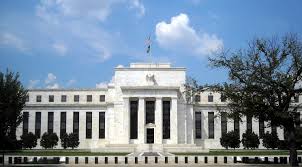
The central bank could hold its assets and keep interest low. This means the drag on the economy continues. So the end is near for Bernanke as chairman. The end seems like the place to start.
Oh, by the way, the Fed balance sheet swelled to $4 trillion. At $4.01 trillion for the week ended December 18th. It was less than $1 trillion before the financial crisis in 2008. The taper will only slow that balance sheet boom. Exiting the unprecedented quantitative easing could be even harder, even as policymakers have acknowledged that that the balance sheet raises risks. The full exit could take years.
Active selling of assets would drive mortgage and Treasury rates higher. That could also depress bond prices.
The central bank could hold its assets and keep interest low. This means the drag on the economy continues. So the end is near for Bernanke as chairman. The end seems like the place to start.
10:29 PM
U.S. markets are higher and less volatile. The economy still feels weak.
Barclays analysts released their new Global Outlook - stating to stay in stocks. Ben Bernanke, Federal Reserve chairman, has said that stock market highs are not a new bubble. He said stocks should be high because companies are booking strong profits.
The economic confidence has not been boosted with the stock market numbers. Does the global expansion have staying power? The Fed bond buying hasn't hurt, keeping interest rates low.
Are we sleepwalking? Maybe.
One item to look at is volatility and it has been low as of late, indicating steady stock price increases and a recovering economy. The Bernanke approach will continue. He said low interest rates in advanced nations benefit the world economy.
Volatility will not remain low. Will value producing profits remain high? That depends. More chapters of the long-term debt purchases by the Fed have to be written.
Source posts: How To Square the Market Bernanke Says Easing by Advanced Nations Helps
Barclays analysts released their new Global Outlook - stating to stay in stocks. Ben Bernanke, Federal Reserve chairman, has said that stock market highs are not a new bubble. He said stocks should be high because companies are booking strong profits.
The economic confidence has not been boosted with the stock market numbers. Does the global expansion have staying power? The Fed bond buying hasn't hurt, keeping interest rates low.
Are we sleepwalking? Maybe.
One item to look at is volatility and it has been low as of late, indicating steady stock price increases and a recovering economy. The Bernanke approach will continue. He said low interest rates in advanced nations benefit the world economy.
Volatility will not remain low. Will value producing profits remain high? That depends. More chapters of the long-term debt purchases by the Fed have to be written.
Source posts: How To Square the Market Bernanke Says Easing by Advanced Nations Helps
8:49 PM

High frequency. That's how I describe the market economy these days. We have to be on a whole new high frequency to keep up with what's going on. Or at least I'd like to think so. We have had quite a bit of information to digest. With Quantative Easing in place with the Fed buying mortgage backed securities at a furious pace, which will keep interest rates low; perhaps as far out as 2016, giving investors more incentive for dividend paying stocks. ETF's are also a big product now (no more stock picking).
What will Treasuries be like in one year? Flatlined? Well, maybe. The demand for them surely can't be increasing. Someone must know something I don't. Well.... yeah.
The S&P 500 has had a good three-year run. Throughout it all.... fiscal cliff, etc., the S&P has been a leader as far as market barometers go.
The economy still has a demand problem.

Labor share of income hit an all-time low in 2012. Corporate investors reaped nice gains as the labor market stays weak. The Retail ETF (XRT) beat the S&P 500, while the Homebuilders ETF (XHB) was the cream of the crop.
And all of a sudden housing is back. Thank you Ben! The Fed move is tying more to housing than what I had expected. With that...........

expect housing to continue the recovery.... watch home affordability. And continued labor market woes. Recovering labor yes, but at a slow pace.
The central banker remains at the forefront around the globe. Bernanke really wants the world to jump on board his program for more bond buying. Will the foreign central banks also but mortgage backed securities. Will they invest in our housing? They just might.
That should ease unemployment. But what about inflation? Are we against the inflation clock? The Fed does not expect inflation to go above 2% at all. Someone, somewhere has to be shaking their head and wondering what the Fed is taking. It really can't be a dose of reality, can it?
I feel the Fed has told the world that we are all in this together. Will all the players come to the table and play the Fed game? We shall see.
34 charts from theatlantic.com was used as a source story.
9:53 PM
Expansionary monetary policy, which lowers interest rates and eases credit, can be used to fight unemployment and economic recession. Policy makers around the world have put this practice in place. The "race to the bottom" for global interest rates is on.
Low interest rates should help increase consumer spending. But lower rates could be translated as damage limitation rather than growth promotion. Balance sheets are strong and cash is piling up. Job creation has to come from the corporate sector. However corporations are not on a hiring binge.
Corporate hiring caution is coming from economic uncertainty. One item in that category is the fiscal cliff. Fed policy has pushed interest rates to all-time lows. Dividend yields are now very attractive. Dividend yields are now higher than treasuries for the first time in 50 years. Investors are looking at equities to provide income. They are extracting capital from share buybacks or dividends.
Policymakers need to look at the equity market's part in driving corporate behavior. Meaningful acceleration in the global economy isn't likely to come from the listed sector of corporations.
Low interest rates are contributing to the situation of corporations becoming capital distributors instead of investors. Rates should be allowed to rise so equity investors will become less income-obsessed. Interest rates however will remain low.
Link to the source story from Tyler Durden
Low interest rates should help increase consumer spending. But lower rates could be translated as damage limitation rather than growth promotion. Balance sheets are strong and cash is piling up. Job creation has to come from the corporate sector. However corporations are not on a hiring binge.
Corporate hiring caution is coming from economic uncertainty. One item in that category is the fiscal cliff. Fed policy has pushed interest rates to all-time lows. Dividend yields are now very attractive. Dividend yields are now higher than treasuries for the first time in 50 years. Investors are looking at equities to provide income. They are extracting capital from share buybacks or dividends.
Policymakers need to look at the equity market's part in driving corporate behavior. Meaningful acceleration in the global economy isn't likely to come from the listed sector of corporations.
Low interest rates are contributing to the situation of corporations becoming capital distributors instead of investors. Rates should be allowed to rise so equity investors will become less income-obsessed. Interest rates however will remain low.
Link to the source story from Tyler Durden